
NDFC - This Week in Congress
They're Back: Congress Returns for Lame-Duck Session with Packed Legislative Agenda
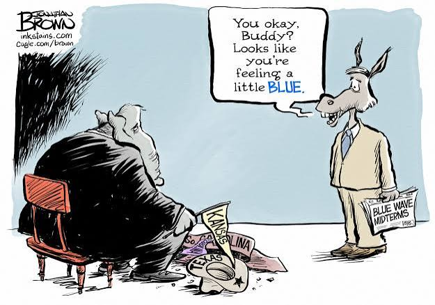
Congress returns to Washington this week for its five-week lame-duck session, facing a lengthy list of unfinished legislative business and a dramatically altered political landscape following last Tuesday's midterm elections. Democrats flipped both the House and Senate in a sweeping electoral victory, setting the stage for a major shift in congressional leadership when the 120th Congress convenes in January. Although a handful of races are still being counted, one thing is already clear: Capitol Hill will have plenty of new faces, new committee leaders, and a different legislative agenda come January.
But before the transfer of power, lawmakers must navigate approximately five weeks of remaining business under the current Republican-controlled Congress. The central question is not simply what lawmakers can accomplish during the lame-duck session, but how much unfinished business will be left for the incoming Democratic majorities.
The House considered seven measures including several proposals related to nuclear energy. The Senate voted on the motion to proceed to the legislative vehicle for a permitting overhaul measure (H.R. 2347).
The most immediate challenge is keeping the federal government funded. The current continuing resolution expires December 11, and none of the 12 annual appropriations bills for FY2027 have been enacted. Appropriators had hoped to complete the spending bills during the lame-duck session, but Democrats' sweeping midterm victories could complicate those efforts. With Democrats preparing to assume control of both chambers in January, they are expected to push for tighter restrictions on President Trump's spending authority, changes to defense and immigration funding, and increased investments in domestic programs.
The ongoing war with Iran and demands to restore enhanced Affordable Care Act (ACA) premium subsidies could further complicate negotiations. Given the limited time remaining and the growing political divide, another short-term continuing resolution is increasingly likely, potentially pushing major spending decisions into the next Congress.
Republicans are also considering one final budget reconciliation package before Democrats take control of Congress in January. Increasing defense spending is among the leading priorities. However, Republicans remain divided over how to pay for additional spending, and leadership could face difficulty securing the votes necessary for passage. With narrow majorities, combined with several defeated or retiring lawmakers potentially unwilling to participate in the final weeks of the session, the prospects for another reconciliation package remain uncertain.
Congress will also attempt to complete the FY2027 National Defense Authorization Act (NDAA), one of the major legislative measures that typically commands bipartisan support. Negotiations will focus on defense spending, military readiness, national security priorities, and other policy provisions before the end of the year. Beyond government funding, reconciliation, and the NDAA, lawmakers have several other priorities competing for attention:
- Farm Bill: Efforts to advance a new comprehensive Farm Bill, including agricultural programs, farm support, and nutrition policy.
- Health Care: Addressing expiring health care provisions and the future of enhanced ACA premium subsidies.
- Surface Transportation: Advancing surface transportation legislation and addressing infrastructure funding priorities.
- Judicial Nominations: Completing outstanding judicial nominations before the current Congress adjourns.
The lame-duck session represents Congress's final opportunity to address major legislative priorities before the transfer of congressional power in January. Republicans still control both chambers for the remainder of the 119th Congress, but the election results will undoubtedly influence negotiations and the willingness of lawmakers to reach agreements.
Democrats Capture Control of House and Senate in Sweeping Midterm Victory
Democrats have secured control of both chambers of Congress in a sweeping midterm election victory, fundamentally reshaping the political landscape in Washington and setting the stage for a divided government as Republicans retain control of the White House.
House of Representatives: Democrats have secured control of the House, with the latest Decision Desk HQ tally showing 254 Democrats and 161 Republicans elected. Approximately 20 races remain unresolved, but Democrats have established a commanding majority that will give them control of the legislative agenda, committee leadership, and oversight responsibilities.
U.S. Senate: Democrats have secured at least 54 seats, compared with 44 Republicans, with two races remaining uncalled in Alaska and Mississippi.
- Alaska: Democrat Mary Peltola is challenging Republican incumbent Sen. Dan Sullivan and currently holds a narrow lead. If neither candidate receives more than 50% of the first-choice vote, ranked-choice tabulation will determine the winner. The final tabulation is scheduled for November 18.
- Mississippi: Democrat Scott Colom is narrowly leading Republican incumbent Sen. Cindy Hyde-Smith. Thousands of provisional ballots remain to be counted, while additional absentee ballots postmarked by Election Day can arrive through November 10. Mississippi does not provide for an automatic recount, although a candidate may petition the courts for one.
- Ohio Senate Seat Adds to Republican Challenges: Republicans will also lose another Senate vote during the final weeks of the current congressional session following the defeat of appointed Sen. Jon Husted (R-OH) in the special election to fill the remainder of the term previously held by Vice President JD Vance. Under Ohio law, Sen.-elect Sherrod Brown (D-OH) could be sworn in as early as December 15, when Husted's appointed term officially expires.
Congressional Leadership Battles Begin as Parties Prepare for the 120th Congress
With Democrats preparing to take control of both chambers of Congress in January, lawmakers are beginning the process of selecting their leadership teams for the 120th Congress. The internal party elections, scheduled over the next several weeks, will determine who sets the legislative agenda, directs committee priorities, and leads negotiations with the Trump administration. The leadership contests are particularly significant following the Democrats' sweeping midterm victories, which will bring a change in congressional control, new committee leadership, and a potentially different approach to federal spending and oversight.
Congressional Leadership Elections
- November 10 – House and Senate Republicans - Republicans willelect their leadership teams as they prepare to move into the congressionalminority.
- The House leadership contest will beespecially interesting as members determine who will lead the party followingits loss of the majority. Reps. Steve Scalise (R-LA) and Jim Jordan (R-OH) haveboth announced their intentions to seek the top leadership position afterSpeaker Mike Johnson indicated he would not pursue the position of minorityleader. In the Senate, Sen. John Thune (R-SD) is expected to retain the topRepublican leadership position, transitioning from majority leader to minorityleader.
- November 18–19 – House Democrats - House Democratswill hold their leadership elections as they prepare to assume control of thechamber. Minority Leader Hakeem Jeffries (D-NY) is widely expected to becomeSpeaker of the House when the new Congress convenes, while Rep. Katherine Clark(D-MA) is expected to serve as majority leader. Their leadership team will playa central role in establishing the Democratic legislative agenda, determiningcommittee priorities, and managing the party's relationship with the Republicanadministration.
- Early December – Senate Democrats - Senate Democratswill elect their leadership team as they prepare to take control of thechamber. Sen. Chuck Schumer (D-NY) is seeking to retain his position asmajority leader, but his reelection is not assured. Several incoming Democraticsenators have called for new leadership, setting up what could become acontentious caucus election. The outcome will be particularly important indetermining how Democrats approach legislation, nominations, oversight, andnegotiations with the White House.
- January 3, 2027 – Election of the Speaker - The House willformally elect its Speaker when the 120th Congress convenes on January 3, 2027.Although Jeffries is expected to secure the position, the formal vote will markthe official transition of House leadership and the beginning of the new congressionalsession.
Appropriations Leadership: Key Committee Changes
Beyond party leadership, several important committee assignments are beginning to take shape. Of particular significance are the anticipated changes in leadership on the House and Senate Appropriations Committees, which oversee federal discretionary spending and play a critical role in determining agency funding and program priorities.
- House Appropriations: Rep. Rosa DeLauro Seeks Chairmanship - Rep. Rosa DeLauro (D-CT) has formally announced her intention to become Chair of the House Appropriations Committee. In a letter to colleagues, DeLauro outlined an agenda focused on increasing federal investments in health care, education, housing, scientific research, and other priorities affecting working families. She also pledged to expand Democratic Community Project Funding, commonly known as earmarks. Her proposals include seeking to claw back billions of dollars from Border Patrol, Immigration and Customs Enforcement (ICE), and the Pentagon; challenging what she characterized as illegal federal funding freezes; and incorporating the anti-poverty "10-20-30 Plan" across appropriations bills. DeLauro's priorities offer an early indication of how Democrats may approach federal spending when they assume control of the House Appropriations Committee.
- Senate Appropriations: Sen. Lisa Murkowski Positioned for Top Republican Role - Sen. Lisa Murkowski (R-AK) has confirmed that, following Sen. Susan Collins' defeat, she is positioned to assume a more senior leadership role on the Senate Appropriations Committee. Murkowski also holds the most senior Republican position on the Senate Health, Education, Labor, and Pensions (HELP) Committee following the departure of Chairman Bill Cassidy. Although her seniority could allow her to pursue the top Republican position on HELP, her public statements strongly suggest she intends to assume the Appropriations Committee role as the panel's ranking Republican. If Murkowski takes the Appropriations position, Sen. Josh Hawley (R-MO) is emerging as a leading contender to become the ranking Republican on the HELP Committee. These committee leadership decisions will be consequential. Appropriations will be at the center of negotiations over federal spending, while HELP will oversee major policy areas involving health care, education, labor, workforce development, and retirement security.


